
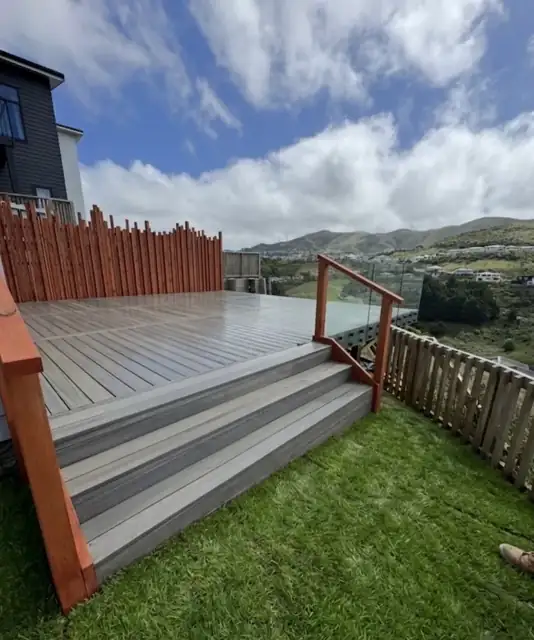
Make the slippery area less likely to be used
Keep people away from a hazardous patch and use another route where possible. Do not begin cleaning from an unstable board or step. If a barrier, support or walking surface is loose or damaged, have the building concern assessed first.
For the overall outdoor project, start with our decking guide. For this problem, take photos in both wet and dry conditions and note where the slipperiness occurs. A shaded strip under pots may have a different cause from the whole walking route.
Why is the wooden deck slippery?
| What you notice | What to investigate | Useful next step |
|---|---|---|
| Leaves, mud or loose debris | Material collecting along the walking route. | Clear it safely and check why it gathers there. |
| Green or dark surface growth | Persistent moisture, shade and a compatible cleaning method. | Clean to the timber and coating instructions, then review drying conditions. |
| Wet areas long after rain | Blocked drainage, low spots or details that hold water. | Record the pattern and arrange assessment where building work may be needed. |
| Uneven or failing coating | The existing product and its wear or application condition. | Get advice on compatible preparation and renewal. |
| Loose, soft or moving parts | Damage to boards, steps, fixings or support. | Keep the area out of use and arrange a building assessment. |
How to clean a slippery deck
Remove loose debris before applying a cleaner. Choose a product suitable for the decking and any existing coating, then follow its dilution, application, contact-time and rinsing instructions. Protect nearby surfaces and plants as directed and test a small area where appropriate.
Use the recommended brush or applicator and a gentle cleaning method. High pressure can damage timber and finishes, and some suppliers advise against it. Keep the wet work area controlled and allow it to dry before normal use.
Inspect the clean surface again. If it remains slippery, do not keep adding stronger chemicals or another coating without identifying the cause. Our deck maintenance guide provides a repeatable cleaning and inspection sequence.
Why does the problem keep coming back?
Look for leaves caught beneath furniture, pots standing on damp patches and planting that keeps the deck shaded or covered in debris. Review these arrangements where practical. Check visible drainage paths and photograph areas where water persists after the rest of the deck dries.
If the issue relates to the deck’s construction or its junction with the house, cleaning cannot change that detail. A building assessment can identify whether repair or alteration is needed. Avoid changing board gaps, cutting drainage slots or altering supports as a trial fix.
Keeping a dated photo record helps distinguish ordinary seasonal growth from a persistent problem in the same place.
Compare grip treatments carefully
Grip strips, textured coatings and replacement surface materials have different installation and maintenance requirements. Check the product’s suitability for the timber, existing finish and wet outdoor use, along with how it will be fixed and cleaned.
A treatment can change the appearance and feel of a walking surface. Edges, fixings and accumulated dirt also need consideration, particularly on steps. Ask for the relevant product information and an installation detail that suits the deck.
Surface treatments do not restore soft timber or secure a loose step. Deal with the building defect first. If a finish change is being considered, our deck oil and stain comparison explains compatibility and preparation.
A short plan for the next wet spell
- Record exactly where the surface is slippery.
- Clear debris and clean with the appropriate system.
- Review pots, furniture and nearby planting.
- Watch how the area dries after rain.
- Arrange assessment of damaged components or persistent drainage concerns.
- Check any proposed grip product for the existing surface and use.
- Keep the date, photos and outcome for the next inspection.
The aim is a practical, repeatable response to the cause. Continue taking care on outdoor surfaces in wet conditions, even after cleaning or a treatment.
Your questions
Will pressure washing fix a slippery deck?
It may remove some surface contamination but can damage timber or coatings, and it will not correct every cause. Follow the decking and finish guidance and investigate recurring moisture or damage.
Can I paint over a slippery deck?
Identify the cause and prepare the surface for a compatible system first. A new coating should not cover growth, failing finishes or damaged boards.
When should a slippery deck be repaired?
Loose steps, soft boards, unusual movement or damaged barriers are reasons to stop using the affected area and arrange an assessment. Persistent water problems may also need building work rather than repeated cleaning.