
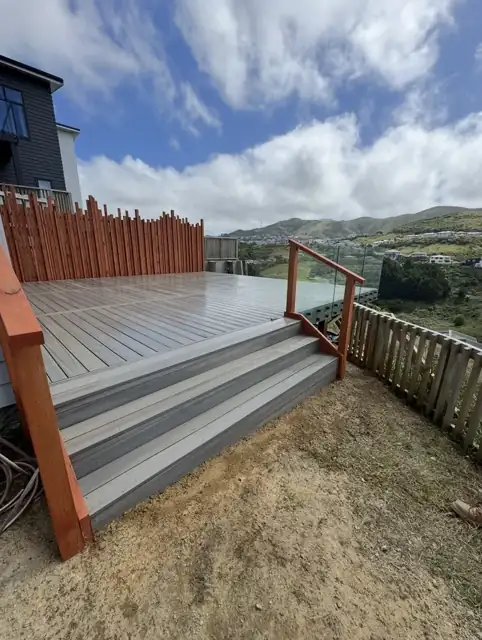
Decking oil or stain: what are you comparing?
The decking guide covers the broader project. For the surface finish, read the actual product description and technical information. Products sold as decking oils can be water-based or oil-based, and stains also come in different formulations. The name alone does not tell you the preparation, film behaviour or recoat process.
| Compare | What to look for |
|---|---|
| Appearance | Colour, pigment level, grain visibility and sheen on your actual timber. |
| Suitability | The specified timber species, condition and existing finish. |
| Preparation | Cleaning, drying, sanding or stripping required before application. |
| Application | Coverage, number of coats, tools, weather limits and drying times. |
| Maintenance | Condition checks, compatible cleaning and the process for renewing the coating. |
An oil-style finish is often chosen to emphasise timber character; a stain can offer a deliberate colour change. These descriptions overlap between products, so use samples and the manufacturer’s specification to make the final comparison.
Choose the look on a sample of your timber
Colour depends on the underlying timber as well as the coating. New pine, weathered pine and reddish-brown hardwood will not necessarily look alike with the same named colour. Test the proposed preparation and finish on a suitable small area or matching board, following the product instructions.
Decide how much grain and natural variation you want to see. More opaque colour can change the overall appearance more strongly, but it is not a repair for damaged timber. If boards vary in age or condition, discuss how the preparation and sample result will translate across the deck.
For a new deck, compare the material and coating together. Our pine versus kwila decking guide covers the timber decision and tannin considerations around adjoining surfaces.
Can you put deck oil over stain?
First identify what is already on the deck. A new finish needs a suitable prepared surface and compatibility with the existing system. Some changes require removal of the previous coating; others may allow a specified maintenance treatment. Ask the manufacturer about the exact combination rather than assuming one label always goes over another.
- Find the previous product name, colour and application information if possible.
- Inspect for peeling, uneven wear and repairs.
- Check the new product’s instructions for previously coated timber.
- Confirm any stripping, sanding and cleaning steps.
- Make a test application where appropriate before treating the whole deck.
If the old coating cannot be identified, seek product advice before buying a full quantity. Layering an incompatible finish can make the eventual preparation more involved.
Application, rain and drying time
The required dry-weather window is specific to the product and conditions. Read the instructions for timber moisture, application temperature, direct sun, drying, recoating and exposure to rain. A surface that feels dry may not yet be ready for another coat, furniture or normal traffic.
Plan the job around the whole process, including cleaning and drying beforehand. Keep the application manageable and maintain the recommended coverage. Follow the manufacturer’s advice if unexpected rain arrives; recovery depends on the product and how far curing had progressed.
In exposed Wellington locations, wind, shade and changing weather can affect the practical work window. Use those conditions to plan the timing rather than adopting a fixed drying time from a different product or site.
Deck stain vs oil: compare the future work
Ask how each shortlisted product is maintained. The useful comparison is the preparation and recoat process you will actually repeat, not a universal promise that one finish lasts a set number of years. Sun, moisture, traffic, timber condition and application all affect wear.
| Maintenance question | Why it matters |
|---|---|
| What does wear look like? | You need to know which condition triggers cleaning, local attention or a full recoat. |
| What preparation is needed? | Cleaning alone, sanding and stripping are different amounts of work. |
| Can the same system be renewed? | Keeping product records makes compatibility easier to confirm. |
| What must be protected? | Plants, pale paving, metalwork and nearby finishes may need protection during preparation and coating. |
| When can the deck be used? | Drying and curing affect access, furniture and household routines. |
The deck maintenance guide provides a care record. If slipperiness returns after cleaning, investigate moisture and surface conditions rather than assuming another finish will solve it.
A simple finish-selection checklist
- Identify the timber and the previous coating.
- Decide the appearance you want and test a sample.
- Confirm product suitability and the complete preparation system.
- Compare coverage and required coats for the deck area.
- Include preparation materials, tools and protection in the job cost.
- Check the application weather window and return-to-use time.
- Keep the product name, colour, batch details where supplied and application date.
For a deck with structural or surface damage, resolve the repairs first. Once the deck is ready, a compatible finish applied to its instructions gives you a clear basis for future care.
Your questions
Is decking oil always oil-based?
No. Products sold as decking oil can use different formulations, including water-based systems. Read the product specification and preparation instructions.
Is stain always longer-lasting than oil?
There is no universal interval that applies to every product and deck. Compare the specific maintenance guidance, exposure and preparation requirements.
How soon can rain fall after staining?
Use the selected product’s rain-resistance and drying instructions, adjusted for the conditions it describes. If rain arrives unexpectedly, follow that manufacturer’s recovery advice.